
Handling-sensitive grooming
Resistance is information about the care environment—not a character flaw.
A fearful, reactive, or previously unsuccessful cat needs a plan that accounts for touch, sound, position, anticipation, pain, and the urgency of the grooming problem.
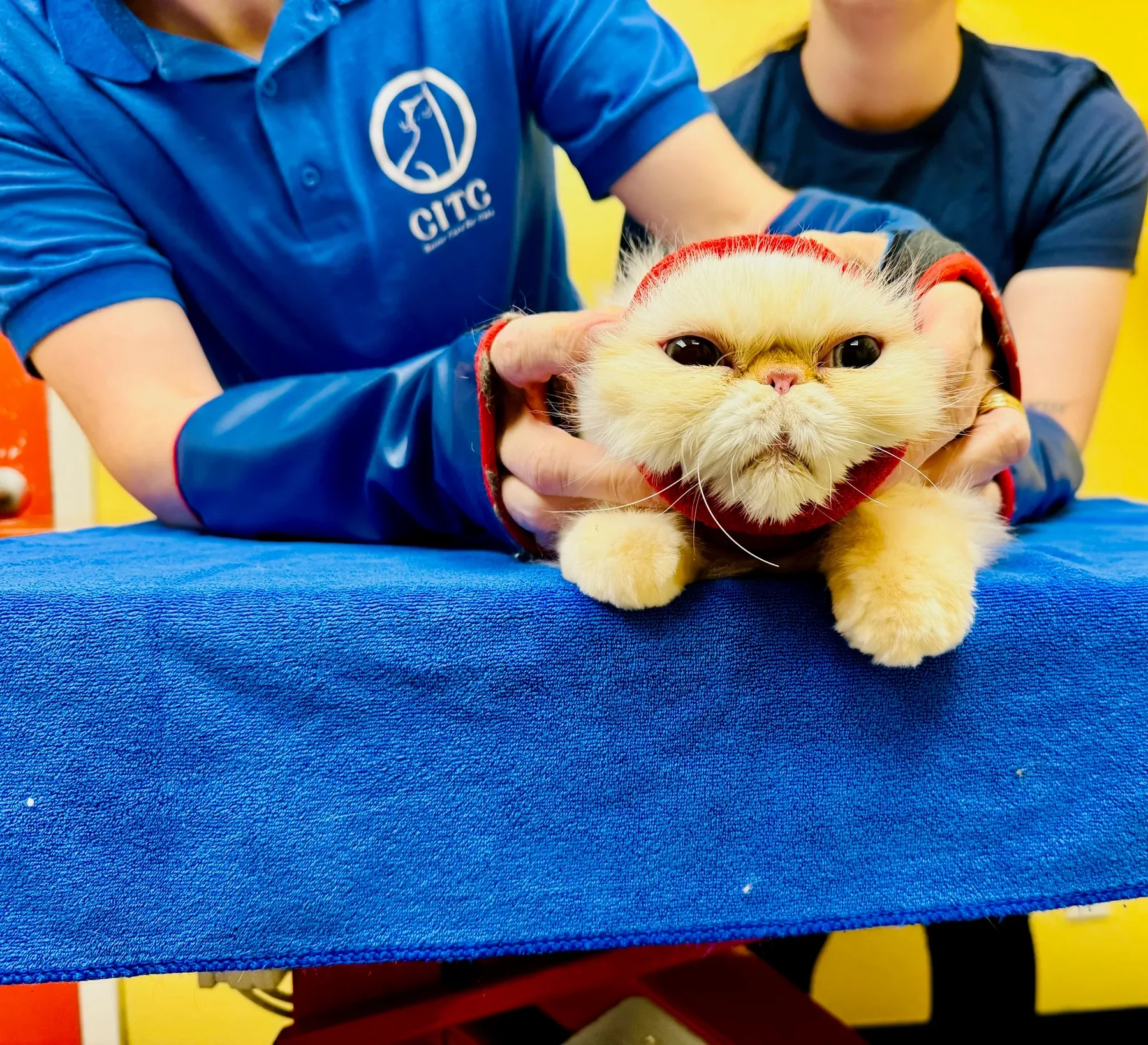
Start here
What can sit underneath “my cat is difficult”
Grooming resistance can emerge from fear, pain, sound sensitivity, loss of balance, prior restraint, skin tension, unfamiliar equipment, or an appointment that has exceeded the cat’s capacity.
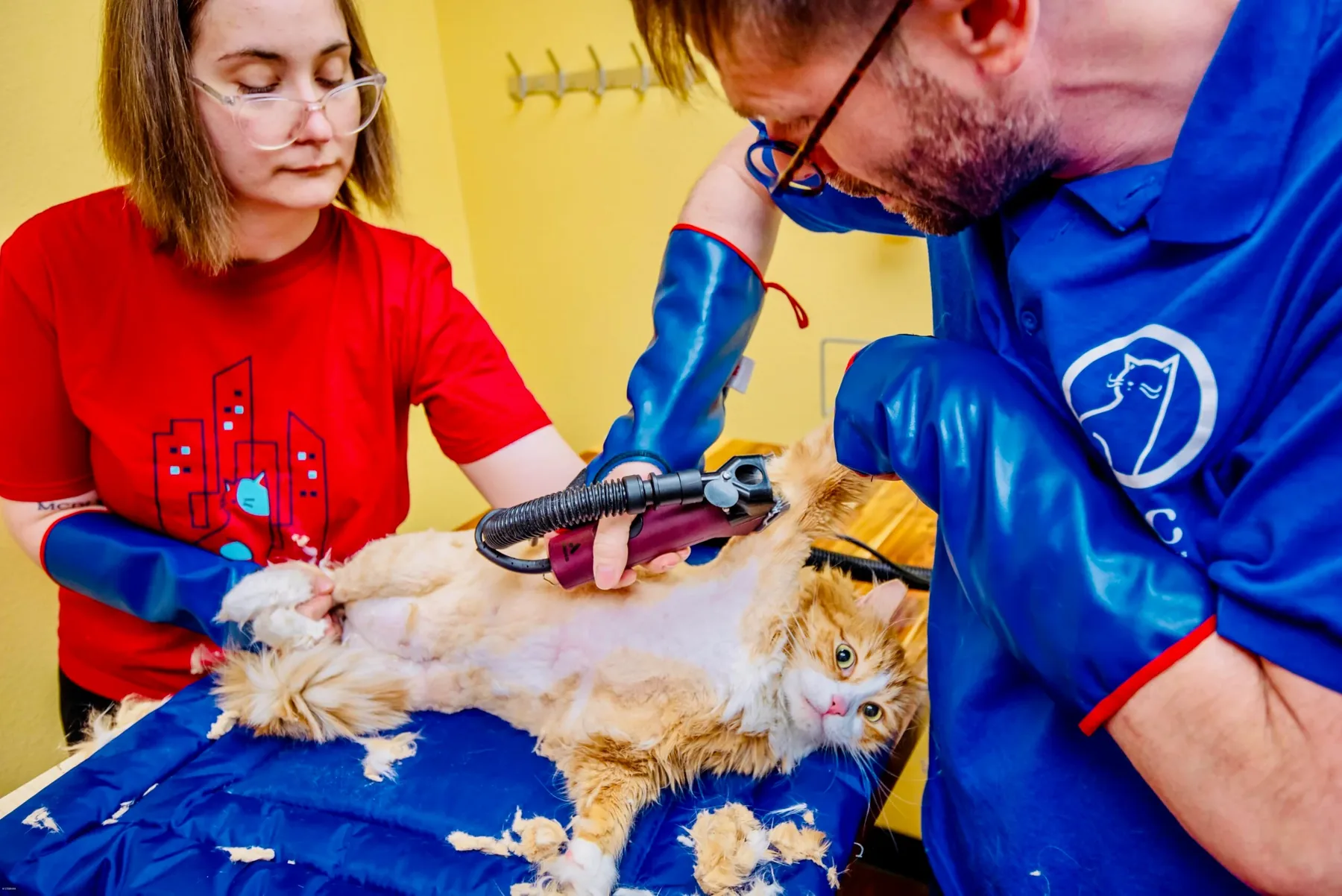
Touch sensitivity
Some body regions, coat tension, or tools produce a much larger response than others.
Explore this guideSound sensitivity
Clippers, dryers, running water, voices, or environmental noise may change regulation.
Explore this guide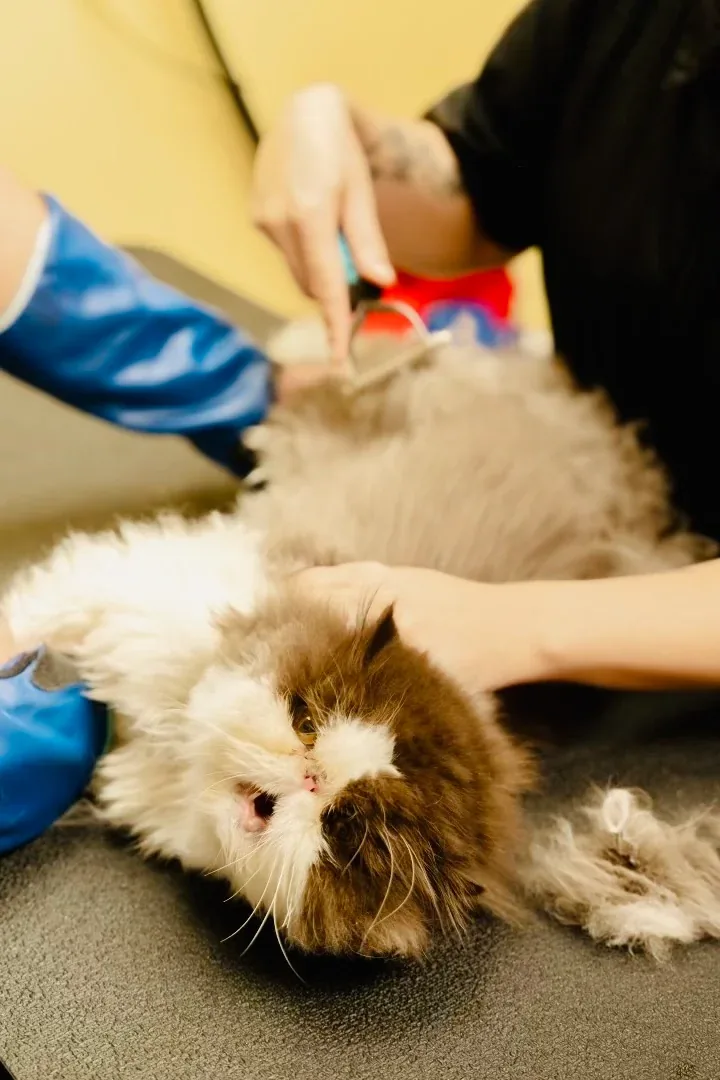
Position sensitivity
Extending limbs, rolling, standing, or losing paw contact can trigger resistance or reveal pain.
Explore this guide
Anticipatory fear
A cat may escalate before contact because earlier care taught what to expect.
Explore this guide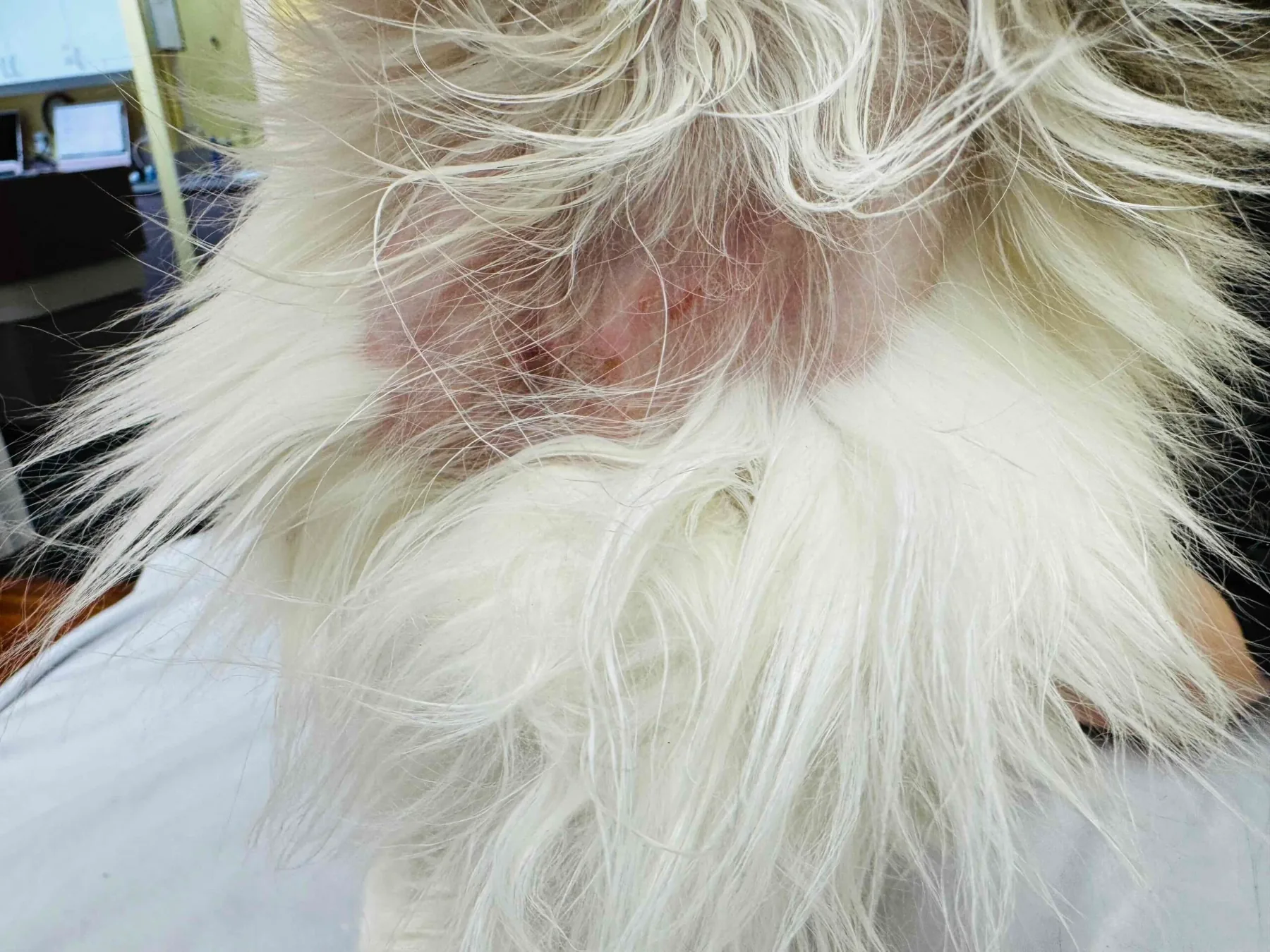
Coat-related pain
Tight mats and pulling can make handling resistance a direct response to the coat itself.
Explore this guide
Medical or mobility factors
Pain, breathing changes, heart disease, arthritis, and neurological conditions can alter tolerance.
Explore this guideTANDEM Cat® care
Separate technical grooming from continuous observation
In solo grooming, one person may be expected to hold the cat, read the body, manage tools, control the environment, and complete the service simultaneously.
Team handling allows one person to maintain support and watch changes while another performs the technical task. Roles can switch as the cat and task change.
The result is not an absence of all protest. It is a more responsive system that treats behavior as body language and makes earlier adjustments possible.
What happens next
A clear path from concern to care
The goal is not to force every cat through the same appointment. It is to understand the need, choose the least disruptive effective plan, and adjust from what the cat communicates.
- 1
Describe previous attempts without minimizing them
Include biting, scratching, urination, defecation, escape attempts, shutdown, sedation history, and where the appointment stopped.
- 2
Identify the urgent goal
A painful pelt and a routine bath do not carry the same urgency or acceptable burden.
- 3
Allow a different endpoint
Success may mean completing the priority safely, gathering useful information, or creating a staged plan.
Common questions
Questions guardians ask before booking
These answers are educational and cannot replace veterinary evaluation when a medical problem is suspected.
Can you guarantee my cat will be completed awake?
No responsible team can guarantee a method before evaluating the cat and need. Many cats are groomed awake, but medication, veterinary collaboration, staging, or deferral may be appropriate.
Does gabapentin always solve grooming resistance?
No. Medication can be one support, but dose, timing, health, environment, handling, pain, and task still matter. Medication decisions belong with the prescribing veterinarian.
Will my cat be labeled aggressive?
The site uses specific behavioral observations rather than moral labels. The goal is to understand what changed, when it changed, and what response reduced or increased distress.
Keep exploring
Related grooming routes
Move from the concern you can see to the service, handling approach, or local clinic most likely to help.
Phase 2 deep routes
Explore 8 focused guides
These pages begin with a specific service, body area, coat change, handling barrier, or decision. Each route links back to Cats in the City for the deeper care system and booking.
Next step
Ready to choose a grooming starting point?
Appointments are provided by Cats in the City at its Powell and Beaverton feline-care locations.