
Health-aware grooming
A diagnosis does not automatically prohibit grooming. It changes the questions the team must ask.
Medical history, mobility, breathing, circulation, skin condition, medication, and recovery status can all change positioning, sequence, duration, and endpoint.
Start here
Ways health status can change grooming
The same coat task can carry very different burdens depending on the cat’s cardiovascular, respiratory, neurological, orthopedic, metabolic, or skin condition.
Arthritis and back pain
Reduce forced range of motion and support body positions the cat can sustain.
Explore this guide
Heart or breathing concerns
Limit exertion, heat, restraint pressure, and prolonged escalation; seek veterinary guidance when indicated.
Explore this guide
Kidney disease and frailty
Account for hydration, endurance, body condition, temperature, and recovery after handling.
Explore this guideDiabetes and meal timing
Coordinate appointment timing, food, insulin instructions, and stress-related changes with the guardian and veterinarian.
Explore this guide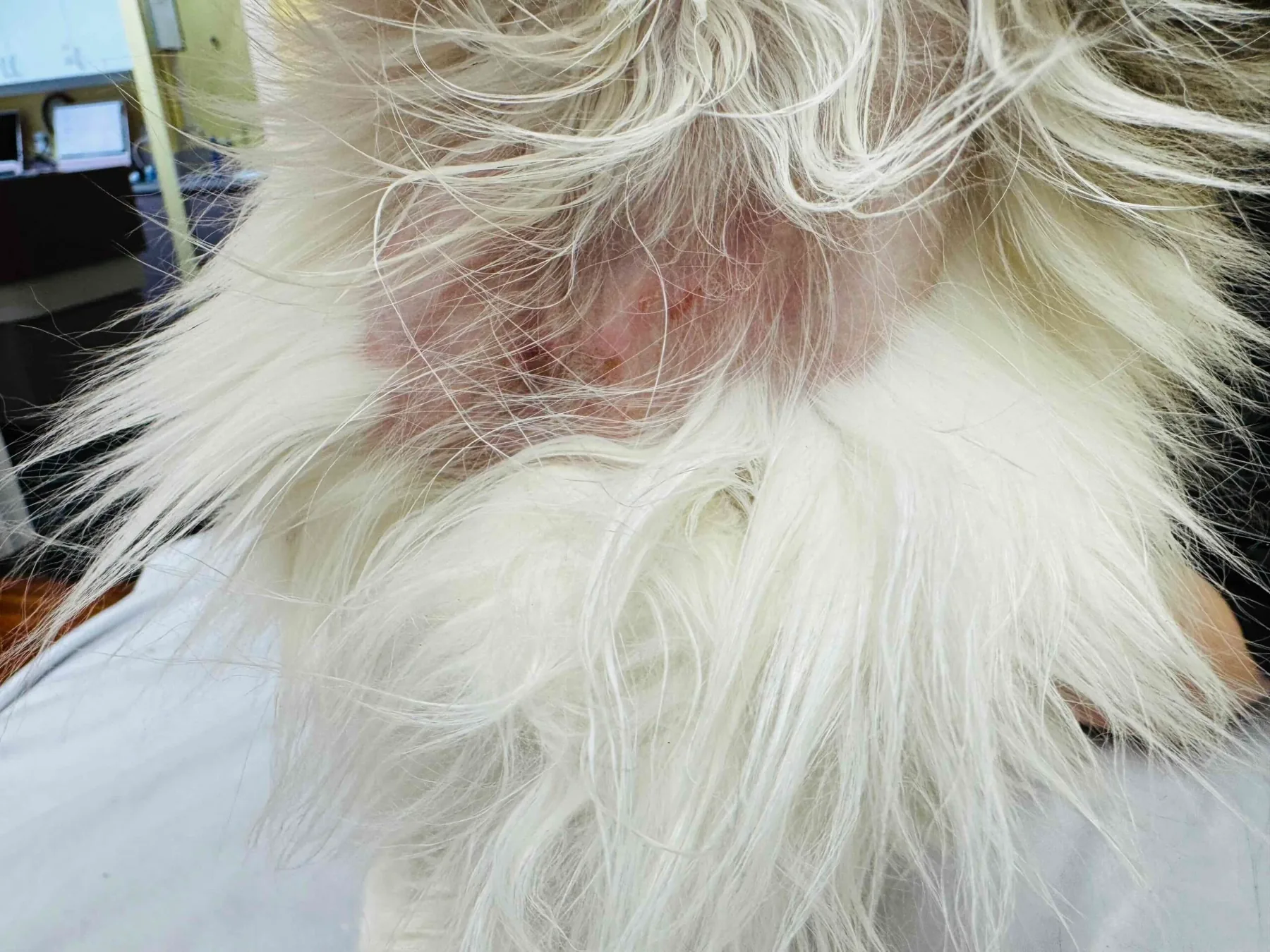
Skin disease or wounds
Avoid making medical claims, protect affected areas, and refer findings that need diagnosis or treatment.
Explore this guide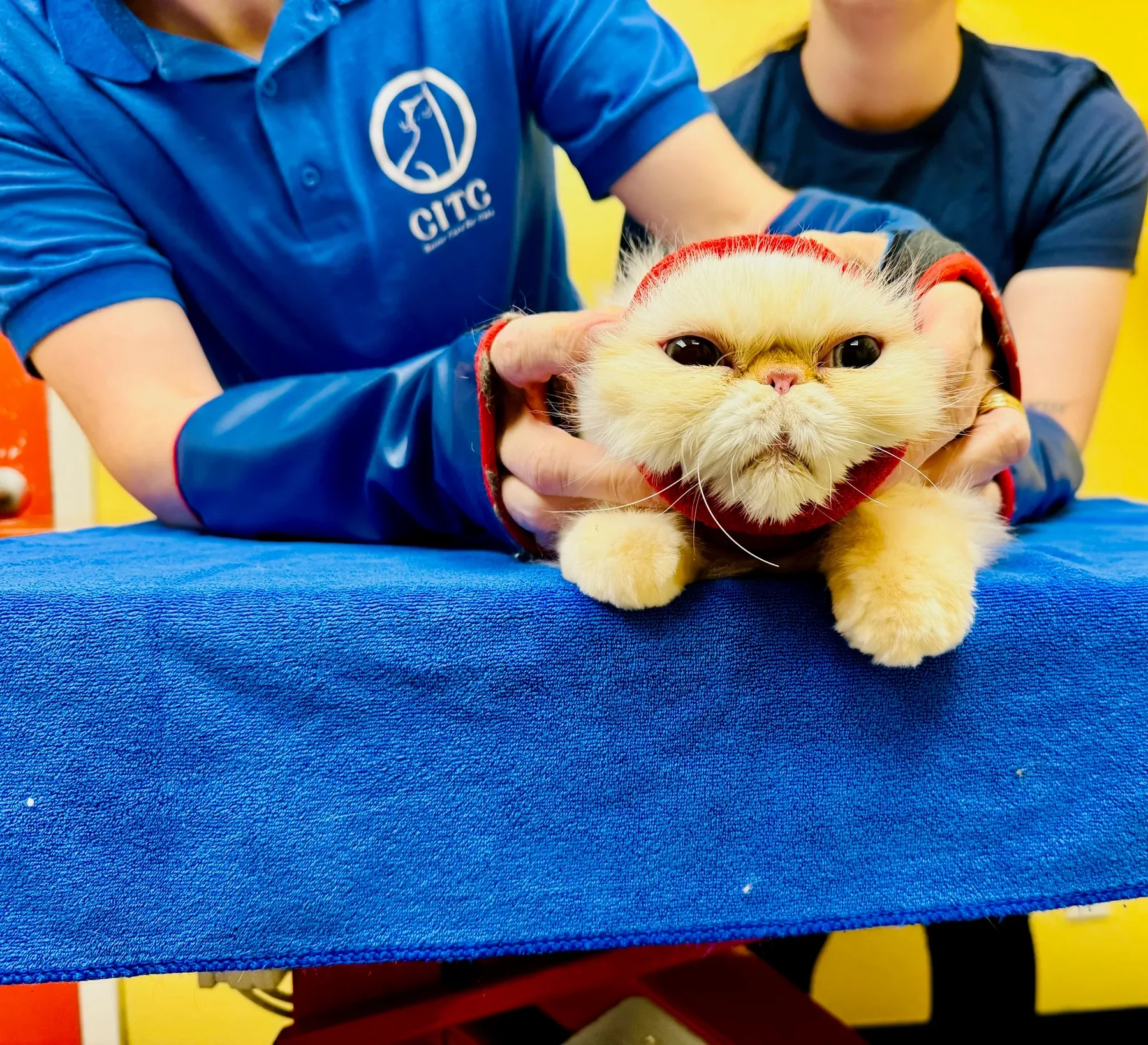
Blindness, deafness, or neurological change
Adapt approach, environmental cues, contact, balance support, and transitions.
Explore this guideClinical observation without overreach
The team can notice and document without pretending grooming is medicine
Grooming provides unusually close access to the coat, skin surface, claws, body movement, breathing pattern, and tolerance of touch. Those observations can be useful to guardians and veterinarians.
The grooming team’s role is to describe what was seen, how the cat responded, what care was provided, and what deserves follow-up—not to diagnose disease.
That boundary makes the service safer and more credible while preserving the value of detailed observation.
What happens next
A clear path from concern to care
The goal is not to force every cat through the same appointment. It is to understand the need, choose the least disruptive effective plan, and adjust from what the cat communicates.
- 1
Provide an accurate health summary
Include diagnoses, recent veterinary visits, medication names and timing, appetite, mobility, and current stability.
- 2
Ask whether clearance is needed
The grooming team may request veterinary guidance when the condition or recent change creates uncertainty.
- 3
Prioritize the least burdensome effective goal
A targeted hygiene reset may be more appropriate than a long comprehensive appointment.
Common questions
Questions guardians ask before booking
These answers are educational and cannot replace veterinary evaluation when a medical problem is suspected.
Can a cat with a heart murmur be groomed?
Possibly, depending on current health, severity, symptoms, veterinary guidance, and the grooming task. A murmur label alone is not enough information.
Can you groom a cat after surgery?
Timing and restrictions should come from the treating veterinarian. The team needs to know incision location, activity limits, medications, and recovery progress.
Will you find medical problems during grooming?
The team may observe abnormalities, but observations are not diagnoses. Urgent or unexplained findings should be evaluated by a veterinarian.
Keep exploring
Related grooming routes
Move from the concern you can see to the service, handling approach, or local clinic most likely to help.
Next step
Ready to choose a grooming starting point?
Appointments are provided by Cats in the City at its Powell and Beaverton feline-care locations.