
Handling-sensitive and awake grooming
My Cat Hates Nail Trims
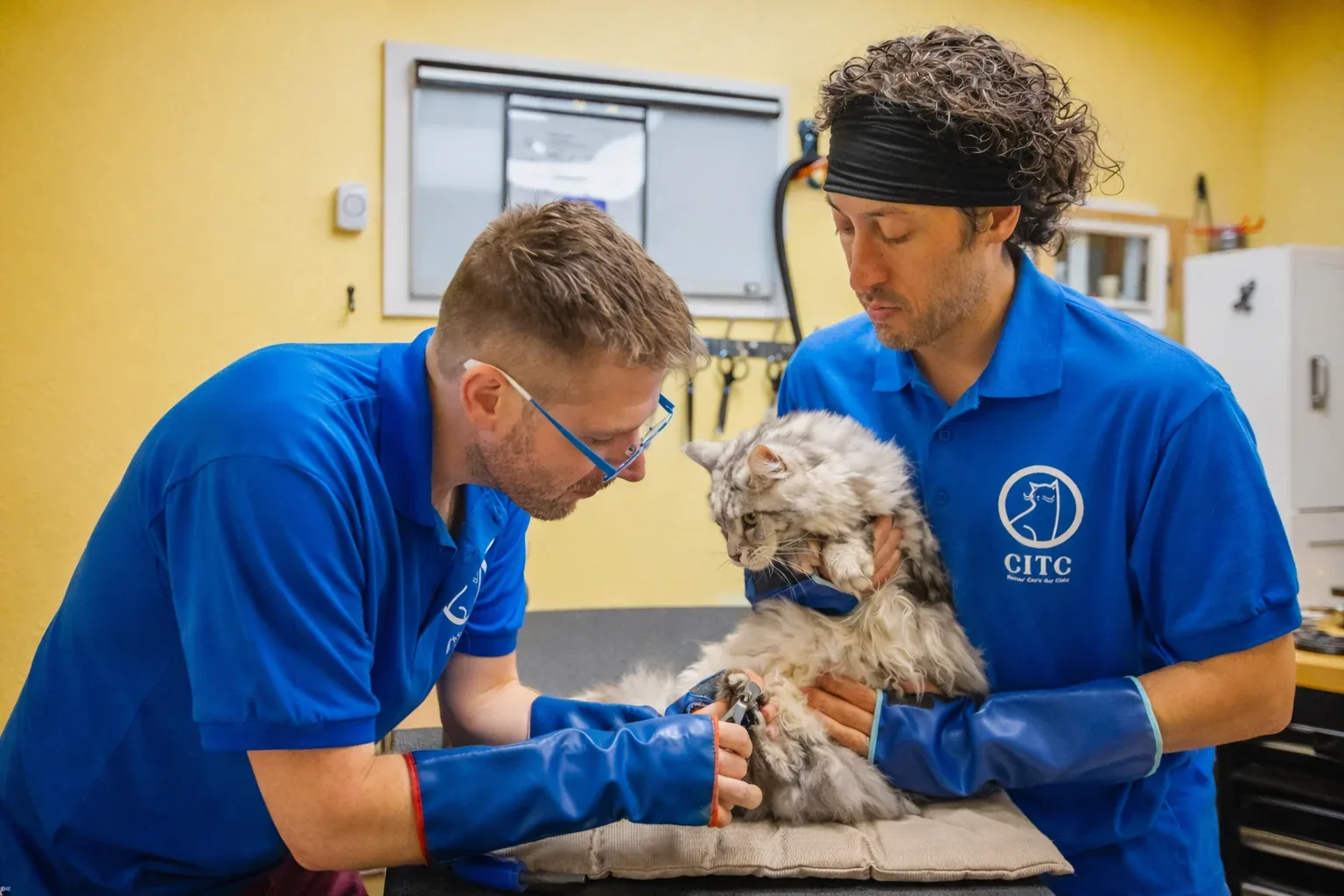
Nail-trim resistance may be about paw handling, restraint, joint extension, clipper sound, previous quicking, balance, or the accumulation of many small stressors. The goal is a safe claw check and trim, not winning a wrestling match.
The practical answer
Start with function, not a preset service name.
Professional care uses clear paw visualization, supported positions, a second handler when needed, and a sequence that minimizes repeated limb manipulation.
Coat, skin, body position, health history, and handling response are assessed together. The final service may differ from the label used during booking.
What guardians may notice
Observable signs that help the team understand the problem
Describe what you can see, feel, smell, or observe during movement. You do not need to diagnose the cause before booking.
Pulling paws away or hiding them
Growling, swatting, biting, or open-mouth distress
Resistance on one limb more than others
A senior cat who can no longer hold the same position
Why it may be happening
Several systems can converge in the same grooming problem.
- 01
Paw sensitivity or injury
- 02
Arthritis and joint range
- 03
Previous painful trim
- 04
Long sessions and forced restraint
Professional scope
What a structured grooming visit can do
- Begin with the cat’s history, present behavior, body position, sound response, and the minimum care that must be accomplished.
- Use team-based support, natural positions, environmental modification, pacing, and stopping points rather than escalating force.
- Adjust the sequence so the most necessary care is completed while the cat has the most usable capacity.
- Document what helped, what increased stress, and what should change at the next visit.
Professional care uses clear paw visualization, supported positions, a second handler when needed, and a sequence that minimizes repeated limb manipulation.
Avoid preventable injury
What not to force at home
- Do not punish, pin, scruff, chase, or continue simply because the appointment was scheduled.
- Do not test repeated home restraint when the cat is escalating or when bites and scratches are becoming more likely.
- Do not give prescription medication unless it was prescribed for that cat and the timing and dose are clear.
Lead with veterinary care
Findings that should not wait on a grooming solution
- Open-mouth breathing, collapse, blue or pale gums, seizure activity, or prolonged inability to recover after stress.
- A sudden behavior change that may reflect pain, neurological change, urinary obstruction, injury, or acute illness.
- A prescribing question, adverse medication response, or need for sedation/anesthesia planning.
Cats in the City authority source
Continue into the deeper care library
This Cat Grooming Portland page is the consumer route. Cats in the City holds the service, clinical handling, case, and care-system material behind it.
Common questions
My Cat Hates Nail Trims FAQ
Can I trim one nail per day?
For some cats, very small sessions work; for others, repeated anticipation creates more stress.
Are thick senior claws harder to cut?
They require better visualization and may shed differently, but can usually be maintained safely.
When does a claw need a veterinarian?
Penetration, swelling, discharge, bleeding, lameness, or a torn claw needs veterinary assessment.
Related routes
Continue by service, condition, or next decision
Book the cat, not a fixed script
Tell the team what you are noticing.
The Cats in the City team assesses the coat, body, health history, and handling needs at check-in and confirms the appropriate care path.