
Undercoat release and maintenance
Shedding is visible. Retained coat is the part guardians often cannot see.
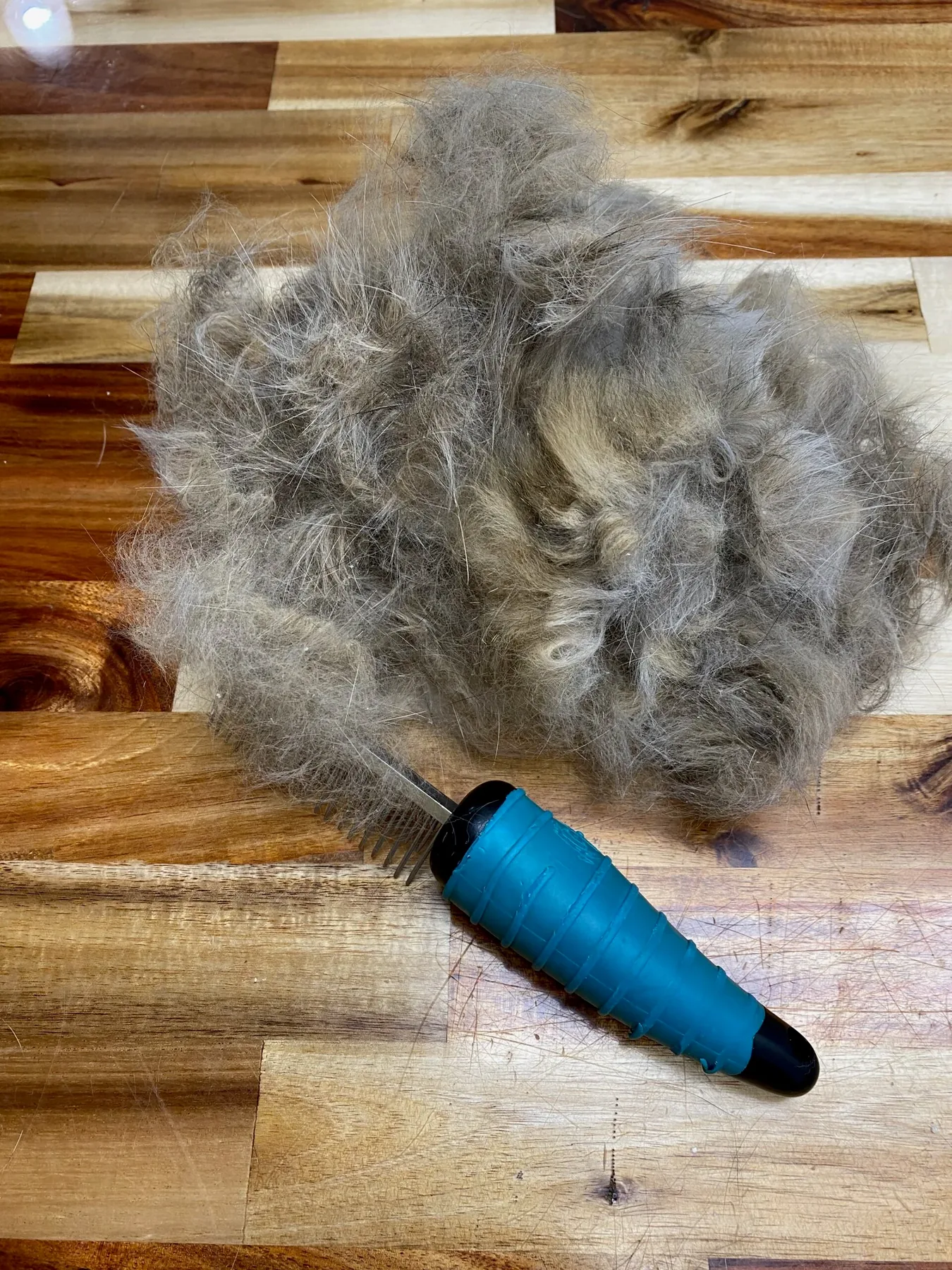
Professional deshedding separates and removes coat that has stopped moving freely, helping reduce density, loose hair, hairballs, and progression toward matting.
Start here
Deshedding can address more than loose hair
Cats can shed heavily while still retaining dense undercoat close to the body. The goal is a coat that separates, moves, and can be maintained—not simply collecting the largest pile of hair.
Seasonal coat release
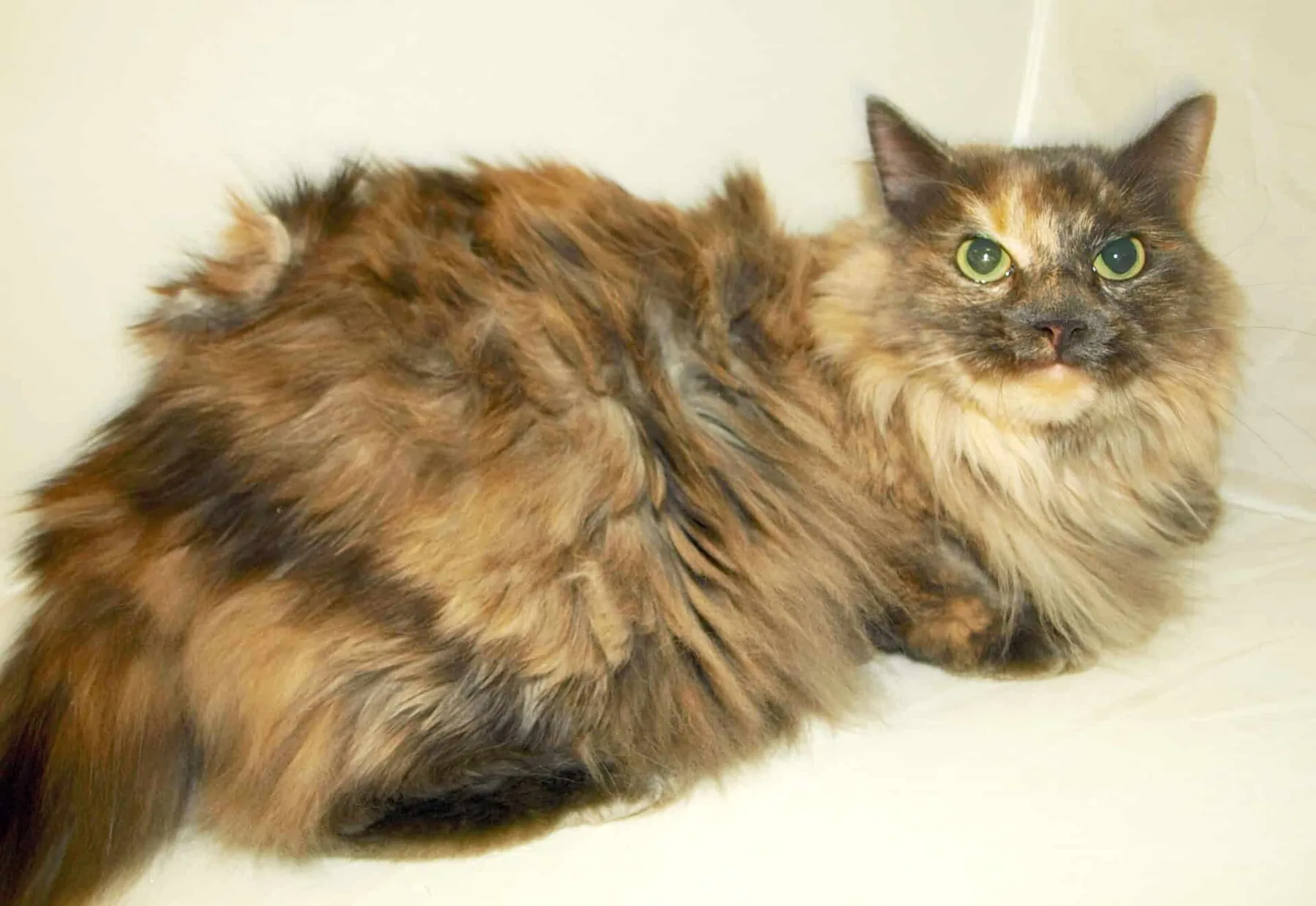
Remove undercoat during high-shed periods before it compacts.
Explore this guide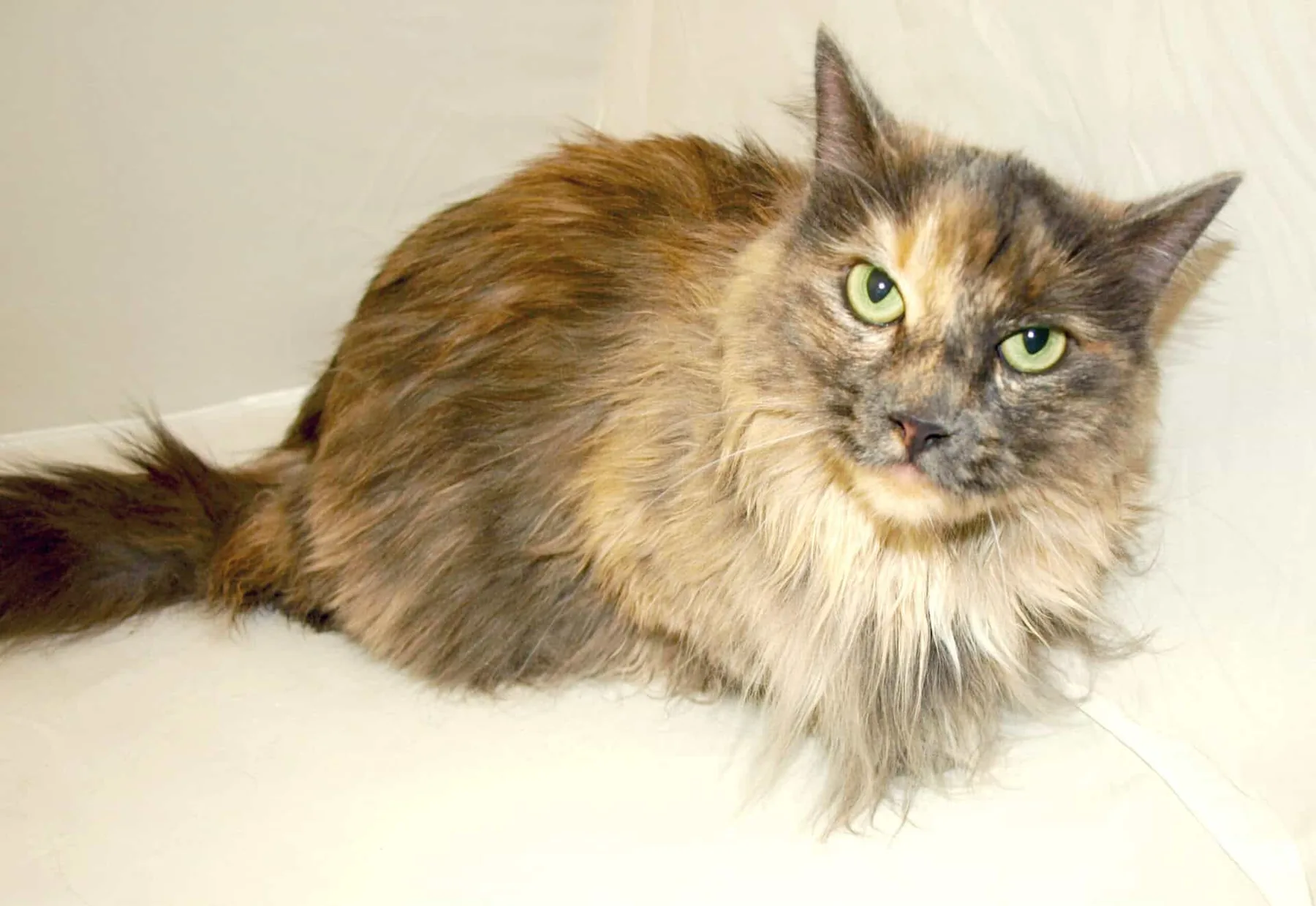
Short-haired cats
Reduce dense loose coat, dander, and oil that ordinary surface brushing may miss.
Explore this guide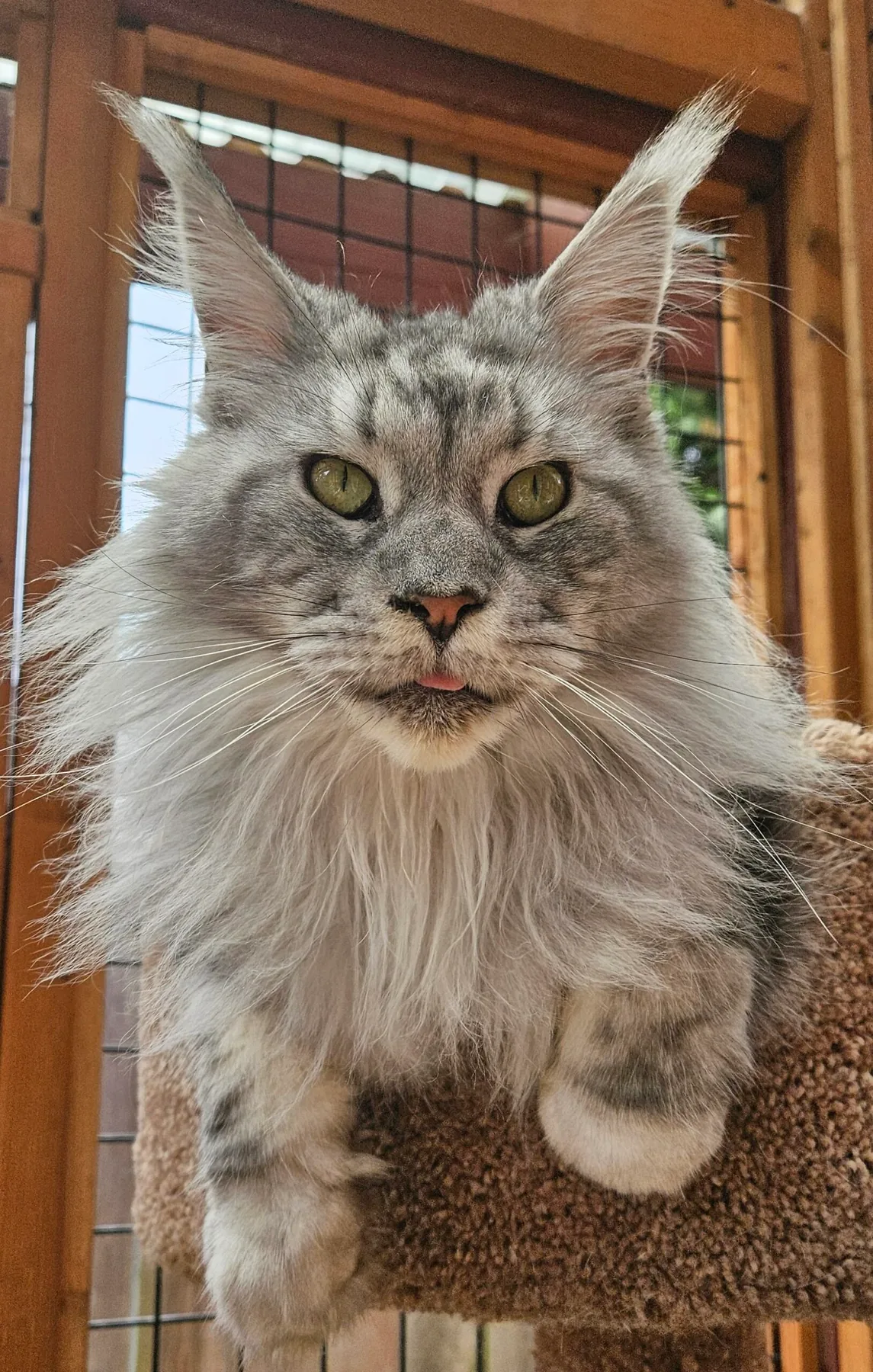
Long-haired cats
Separate undercoat beneath longer guard hairs and protect movement through friction areas.
Explore this guide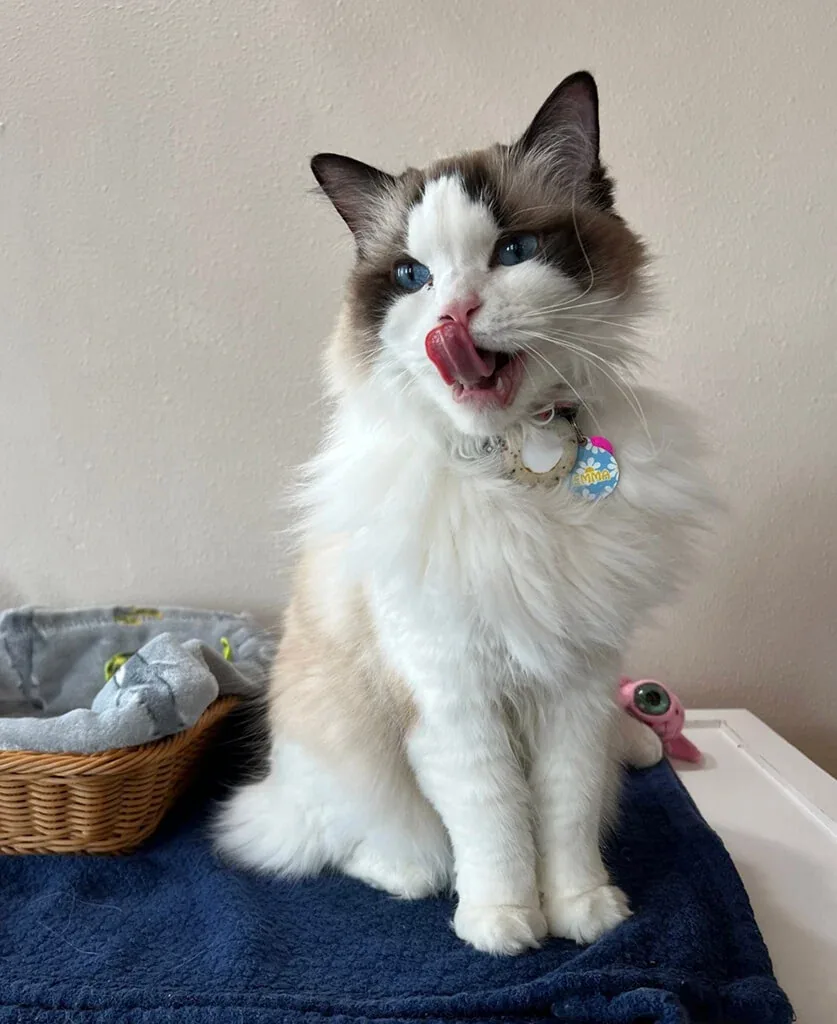
Hairball support
Reduce the volume of loose coat available for ingestion while recognizing that medical causes still need veterinary care.
Explore this guide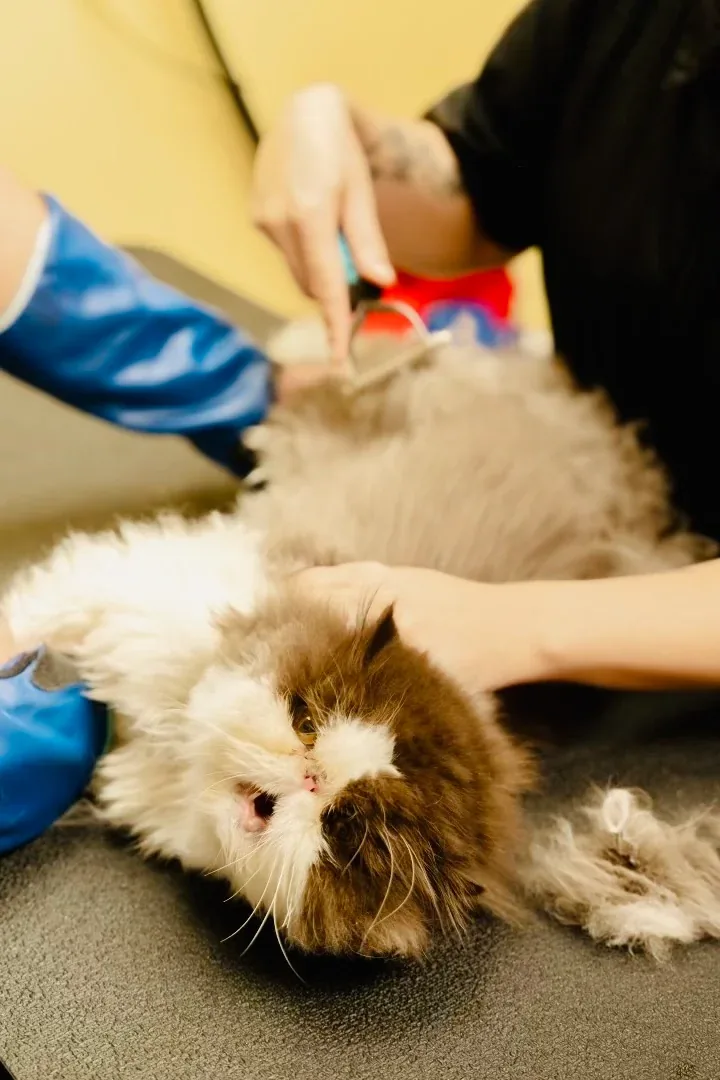
Early coat compression
Intervene before retained coat forms obvious mats or webbing.
Explore this guide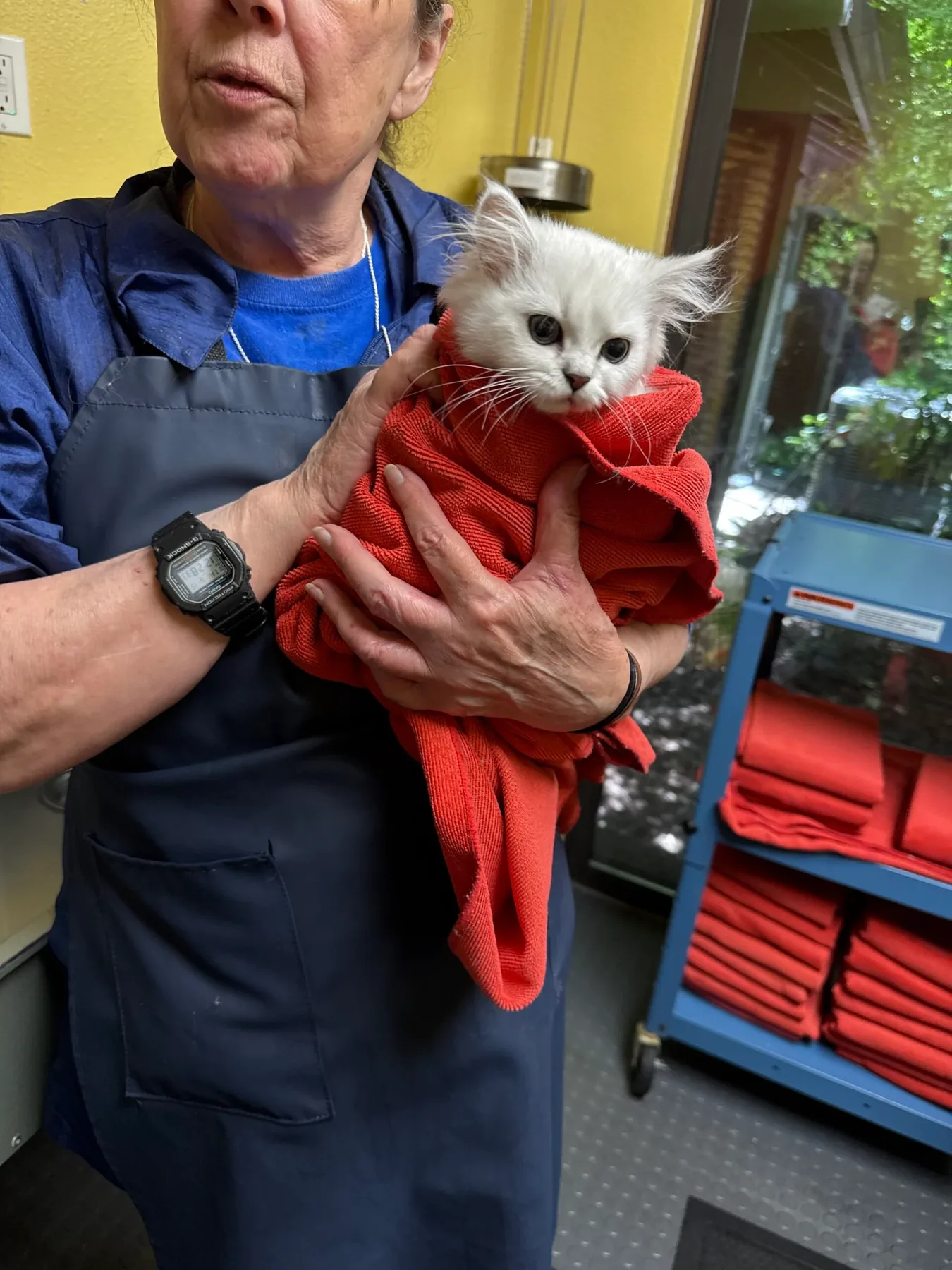
Maintenance planning
Match the interval to coat density, self-grooming, age, season, and home care.
Explore this guideBefore and after
A dense coat can look normal from above
Retained undercoat often sits beneath the visible surface. The coat may look plush while feeling resistant, lumpy, separated into ridges, or difficult to comb to the skin.
Bathing and drying can help release oil, debris, and loose coat so removal does not depend on repetitive dry brushing.
The aftercare goal is not a cosmetically flattened coat. It is improved separation, lower density, cleaner skin access, and a realistic next interval.
What happens next
A clear path from concern to care
The goal is not to force every cat through the same appointment. It is to understand the need, choose the least disruptive effective plan, and adjust from what the cat communicates.
- 1
Check whether the coat separates to the skin
Do not force through areas that feel webbed, tight, or painful.
- 2
Book before seasonal density becomes fusion
Maintenance is less intensive when the coat is still mobile.
- 3
Use the result to set frequency
The amount and condition of retained coat helps determine the next visit.
Common questions
Questions guardians ask before booking
These answers are educational and cannot replace veterinary evaluation when a medical problem is suspected.
Does deshedding stop shedding?
No. Shedding is normal. Professional care can reduce retained and loose coat for a period and improve maintainability.
Is deshedding only for long-haired cats?
No. Short-haired cats can retain dense undercoat and may benefit substantially from bathing, drying, and coat release.
Can deshedding replace mat removal?
Not when coat is already fused close to the skin. Those areas may need controlled clipping.
Keep exploring
Related grooming routes
Move from the concern you can see to the service, handling approach, or local clinic most likely to help.
Phase 2 deep routes
Explore 11 focused guides
These pages begin with a specific service, body area, coat change, handling barrier, or decision. Each route links back to Cats in the City for the deeper care system and booking.
Next step
Ready to choose a grooming starting point?
Appointments are provided by Cats in the City at its Powell and Beaverton feline-care locations.