Shedding, coat density, and hygiene
Why Is My Cat’s Fur Greasy?
Greasy fur means oil is remaining on the coat faster than the cat or home care is removing it. Common contributors include reduced self-grooming, dense retained coat, obesity, pain, skin conditions, and oil-heavy areas such as the tail base.
The practical answer
Start with function, not a preset service name.
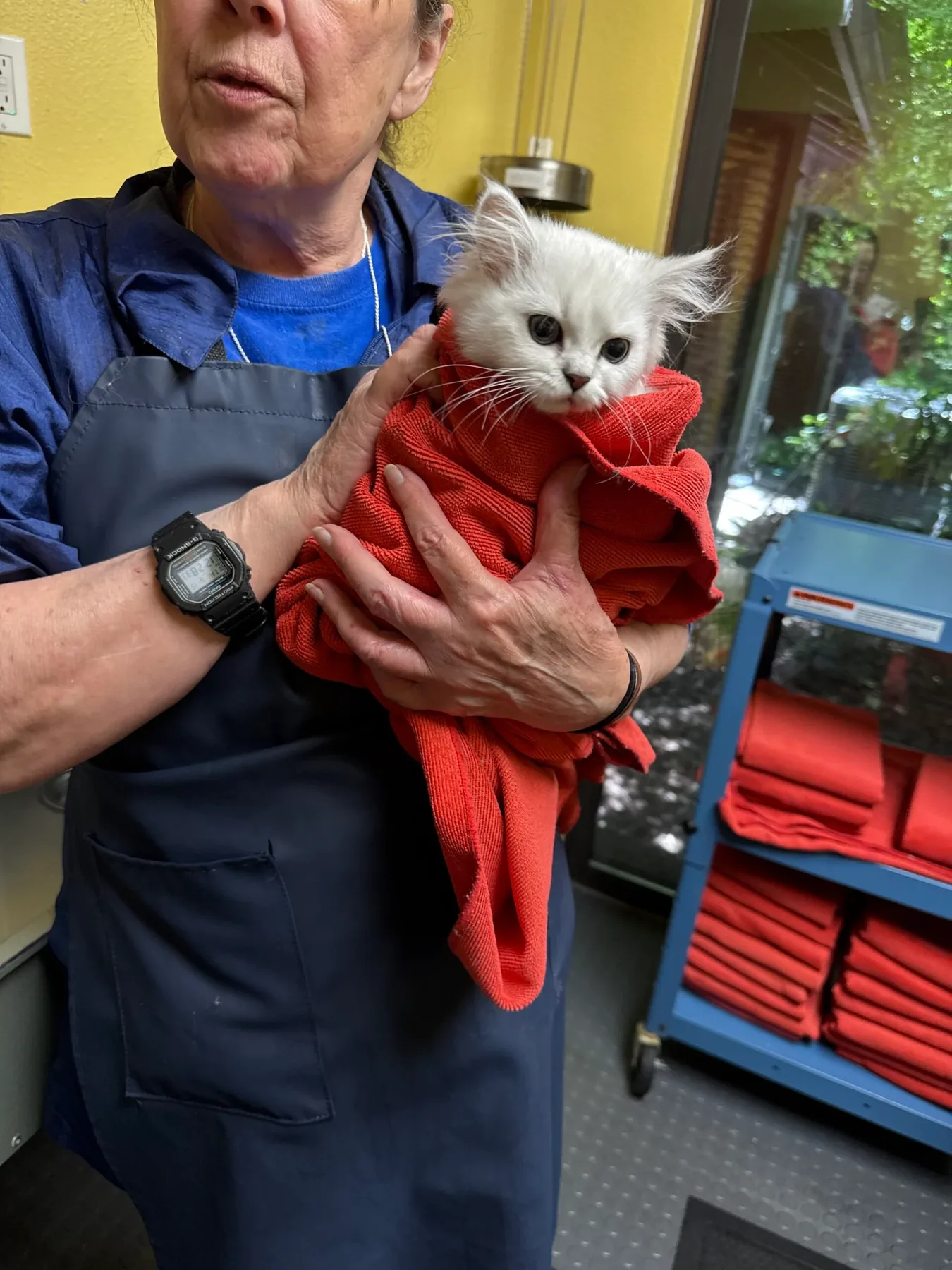
Grooming can degrease and dry the coat thoroughly, release retained undercoat, and document skin findings. It does not diagnose why oil production or self-grooming changed.
Coat, skin, body position, health history, and handling response are assessed together. The final service may differ from the label used during booking.
What guardians may notice
Observable signs that help the team understand the problem
Describe what you can see, feel, smell, or observe during movement. You do not need to diagnose the cause before booking.
Clumped or separated hair
A waxy feel or yellow-gray residue
Odor returning quickly
Dandruff sticking within oily coat
Why it may be happening
Several systems can converge in the same grooming problem.
- 01
Reduced grooming from pain, age, obesity, or illness
- 02
Sebum and tail-gland activity
- 03
Dense undercoat that traps oil
- 04
Topical products or incomplete rinsing
Professional scope
What a structured grooming visit can do
- Separate loose undercoat from healthy attached coat rather than pulling indiscriminately through the surface.
- Use bathing, friction, airflow, combing, or clipping in the combination that fits the coat and the cat.
- Watch skin condition, temperature, fatigue, and tolerance while the retained coat is released.
- Create a realistic maintenance interval based on coat type, age, mobility, season, and home-care tolerance.
Grooming can degrease and dry the coat thoroughly, release retained undercoat, and document skin findings. It does not diagnose why oil production or self-grooming changed.
Avoid preventable injury
What not to force at home
- Do not repeatedly rake one area until the skin is red or tender.
- Do not force a comb through compressed coat that does not move freely from the skin.
- Do not rely on oils or powders to hide odor, grease, dandruff, or contamination.
Lead with veterinary care
Findings that should not wait on a grooming solution
- Rapid hair loss, raw skin, pustules, bleeding, marked swelling, or a spreading rash.
- A sudden major coat change paired with weight loss, thirst changes, lethargy, vomiting, or appetite change.
- Strong pain, feverish behavior, or skin discharge suggesting infection or another medical process.
Cats in the City authority source
Continue into the deeper care library
This Cat Grooming Portland page is the consumer route. Cats in the City holds the service, clinical handling, case, and care-system material behind it.
Common questions
Why Is My Cat’s Fur Greasy? FAQ
Can I use dish soap?
Household degreasers may irritate skin and are not a substitute for a feline-specific plan.
Why is the tail greasier than the body?
The tail base can have concentrated oil-gland activity, sometimes called stud tail.
When should I call the veterinarian?
When grease is sudden, severe, painful, inflamed, odorous, or paired with other health changes.
Related routes
Continue by service, condition, or next decision
Book the cat, not a fixed script
Tell the team what you are noticing.
The Cats in the City team assesses the coat, body, health history, and handling needs at check-in and confirms the appropriate care path.