Breed and coat-type grooming
Himalayan Cat Grooming in Portland
Himalayans combine a dense Persian-type coat with facial and body features that may require regular eye-area hygiene, coat release, bathing, and careful handling. The full coat can compact quickly when maintenance slips.
The practical answer
Start with function, not a preset service name.
Professional care opens and cleans the coat, protects facial structures, and chooses between full-coat maintenance, targeted clipping, or a reset based on condition.
Coat, skin, body position, health history, and handling response are assessed together. The final service may differ from the label used during booking.
What guardians may notice
Observable signs that help the team understand the problem
Describe what you can see, feel, smell, or observe during movement. You do not need to diagnose the cause before booking.
Dense cottony undercoat
Tangles around chest, belly, and legs
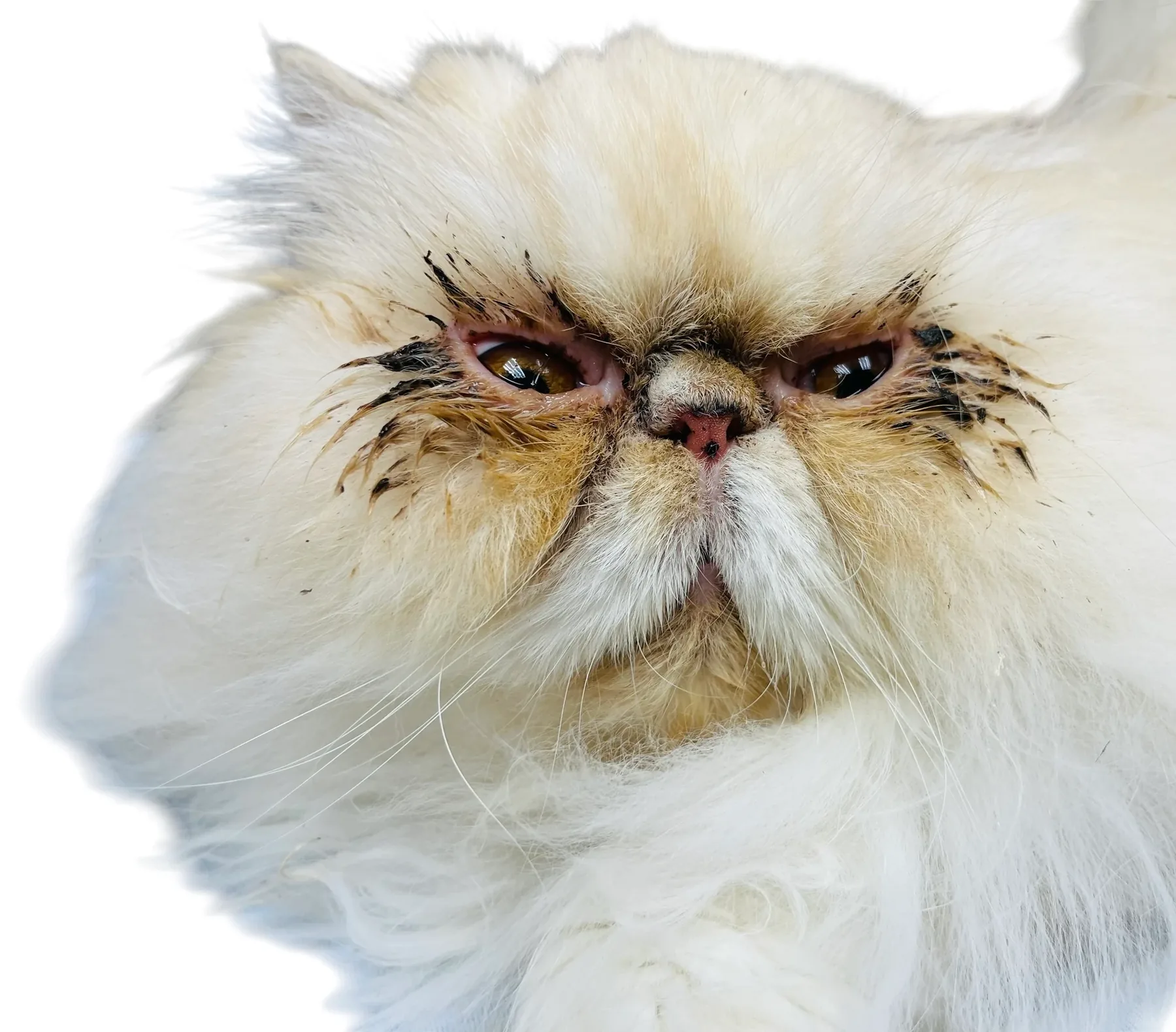
Eye-area staining or facial moisture
Grease, dandruff, or sanitary trapping
Why it may be happening
Several systems can converge in the same grooming problem.
- 01
Coat density and texture
- 02
Facial anatomy and moisture
- 03
Reduced airflow through dense coat
- 04
Home-care tolerance and interval
Professional scope
What a structured grooming visit can do
- Identify actual coat density, texture, oil distribution, undercoat retention, and problem zones rather than relying on breed label alone.
- Match bathing, drying, combing, deshedding, clipping, and maintenance timing to the individual coat.
- Adapt the plan for age, size, mobility, temperament, and previous grooming history.
- Preserve functional coat whenever possible while resolving fused, contaminated, or unmaintainable areas.
Professional care opens and cleans the coat, protects facial structures, and chooses between full-coat maintenance, targeted clipping, or a reset based on condition.
Avoid preventable injury
What not to force at home
- Do not assume every cat of one breed needs the same haircut or schedule.
- Do not use a tool simply because it is marketed for a breed; skin and coat response matter more than the label.
- Do not delay care because the surface still looks full while the undercoat is compacting underneath.
Lead with veterinary care
Findings that should not wait on a grooming solution
- Rapid coat loss, inflamed skin, sores, discharge, or a sudden coat change with systemic symptoms.
- Pain, weakness, breathing change, or inability to tolerate routine body positions.
- Any lesion or condition that requires diagnosis, medication, surgery, or other veterinary treatment.
Cats in the City authority source
Continue into the deeper care library
This Cat Grooming Portland page is the consumer route. Cats in the City holds the service, clinical handling, case, and care-system material behind it.
Common questions
Himalayan Cat Grooming in Portland FAQ
Is a lion cut required for Himalayans?
No. It is one option when the coat is matted or unmaintainable.
Can eye stains be groomed away?
Surface debris can be cleaned, but ongoing discharge or irritation needs veterinary evaluation.
Why does the coat feel cottony?
Dense fine undercoat can retain shed and tangle below guard hairs.
Related routes
Continue by service, condition, or next decision
Book the cat, not a fixed script
Tell the team what you are noticing.
The Cats in the City team assesses the coat, body, health history, and handling needs at check-in and confirms the appropriate care path.