Geriatric and mobility-aware care
When self-grooming changes, the coat often tells the story first.
Senior grooming can restore hygiene and coat function while respecting arthritis, reduced endurance, medical complexity, and changes in tolerance.
Start here
Common reasons older cats need more help
Age does not create one standard grooming plan. Some senior cats need only more frequent maintenance; others need a larger coat reset or a deliberately shortened appointment.
Reduced spinal flexibility
Cats may stop reaching the lower back, hips, tail base, or hindquarters.
Explore this guideArthritis and positioning
Standing, side-lying, extending a leg, or balancing on a table may become harder.
Explore this guideGrease and dandruff
Sebum and skin debris can build where licking and coat separation have declined.
Explore this guideDense or matted coat
Small maintenance gaps can progress rapidly when a cat cannot rotate or pull through the coat.
Explore this guideThickened claws
Senior claws may shed less efficiently and curve toward the paw pads.
Explore this guideHygiene breakdown
Urine, feces, litter, or food can remain on coat the cat can no longer reach.
Explore this guide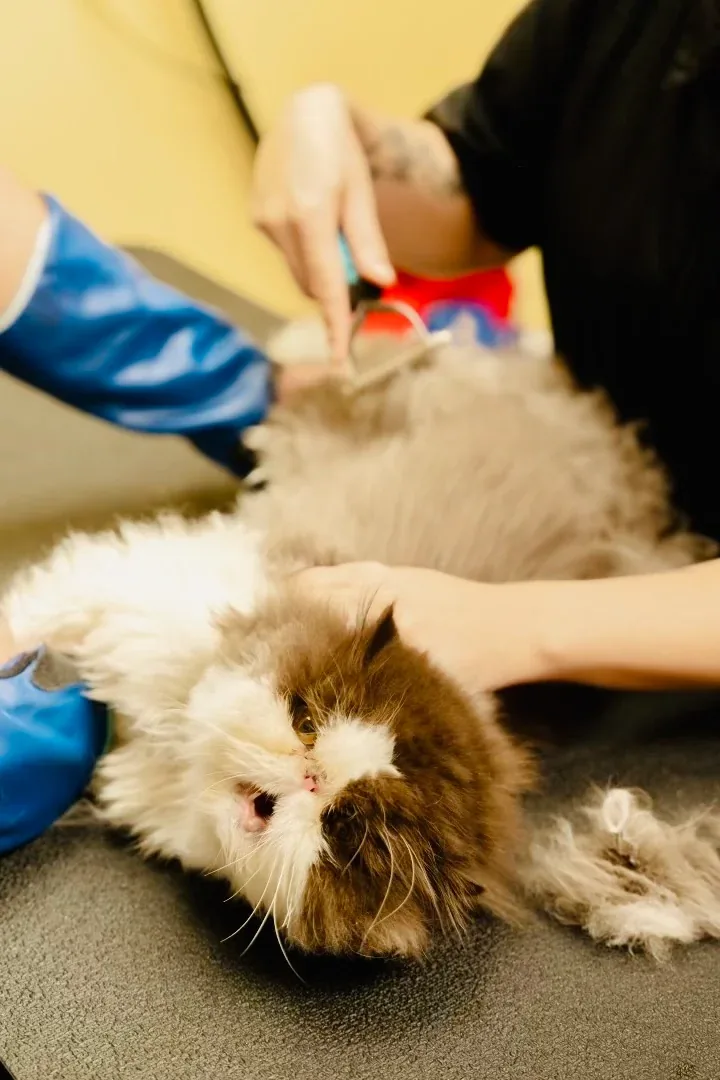
The adaptation
Prioritize function, then choose the least burdensome route
A senior appointment may focus on the areas affecting movement, hygiene, temperature regulation, or skin access rather than completing every cosmetic step.
Team handling can support the body while the groomer works, reducing the need to hold an older cat in one posture for a long period.
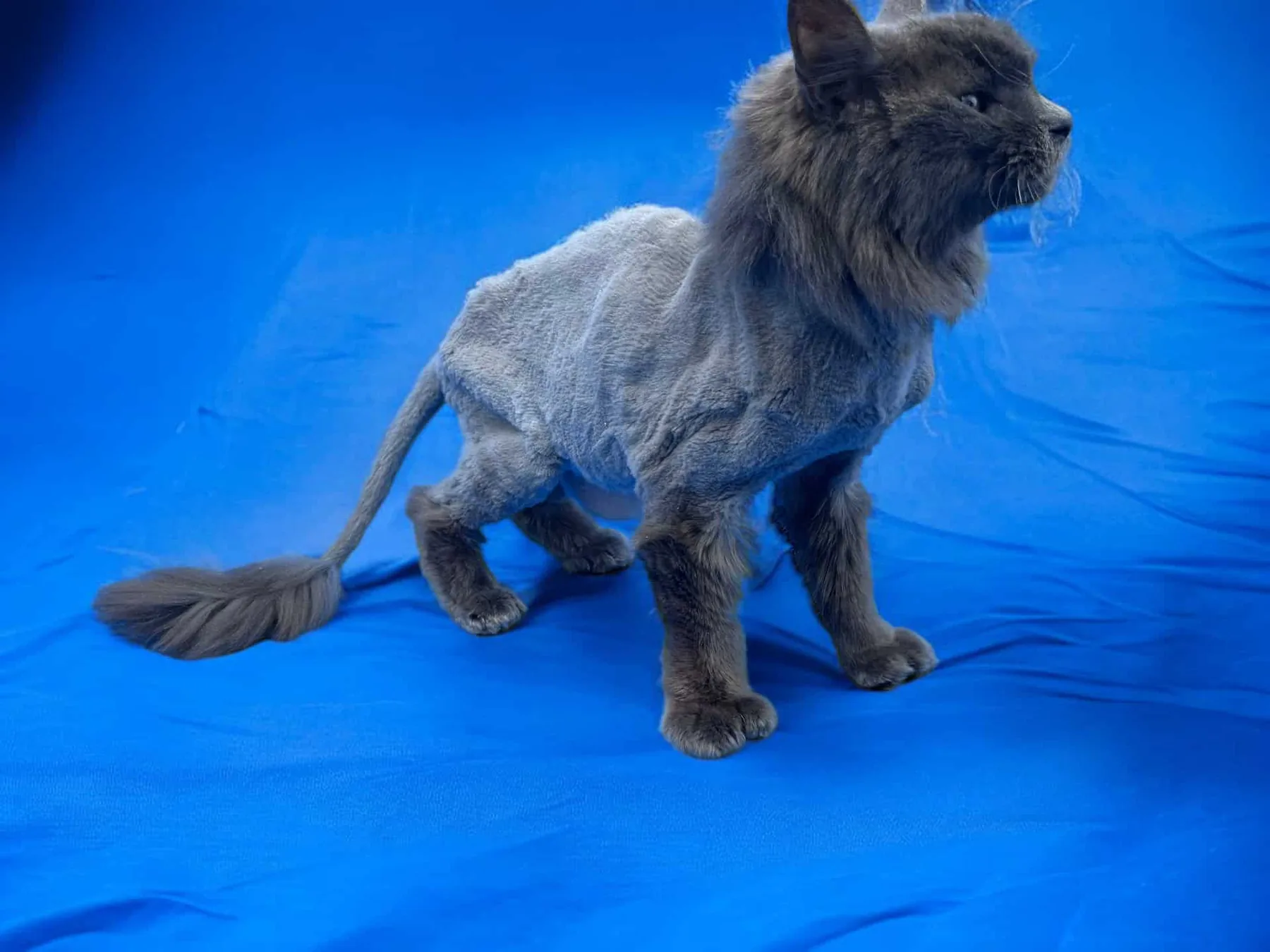
For some cats, a shorter coat or planned maintenance interval is easier than repeatedly trying to preserve a length the cat can no longer manage independently.
What happens next
A clear path from concern to care
The goal is not to force every cat through the same appointment. It is to understand the need, choose the least disruptive effective plan, and adjust from what the cat communicates.
- 1
Share medical and mobility context
List diagnoses, medications, recent falls, stiffness, appetite changes, and areas the cat resists having touched.
- 2
Choose a functional priority
Coat release, hygiene, claw care, or shortening may be more important than a comprehensive finish.
- 3
Build the next interval before the coat collapses
A predictable maintenance schedule can reduce the intensity of future appointments.
Common questions
Questions guardians ask before booking
These answers are educational and cannot replace veterinary evaluation when a medical problem is suspected.
Is a very old cat too old to groom?
Chronological age alone does not answer the question. Current health, mobility, stress response, coat urgency, and the available adaptations matter.
Can the appointment be divided?
Yes. In some cases, staged care is more appropriate than trying to complete every goal in one session.
Why did my senior cat suddenly become greasy or matted?
Reduced self-grooming can reflect pain, reduced flexibility, body condition, dental or medical problems, cognitive change, or coat density. A veterinary conversation may be warranted.
Keep exploring
Related grooming routes
Move from the concern you can see to the service, handling approach, or local clinic most likely to help.
Phase 2 deep routes
Explore 7 focused guides
These pages begin with a specific service, body area, coat change, handling barrier, or decision. Each route links back to Cats in the City for the deeper care system and booking.
Next step
Ready to choose a grooming starting point?
Appointments are provided by Cats in the City at its Powell and Beaverton feline-care locations.