
Mats, pelting, and coat compression
Matted coat is a structural problem—not a brushing failure.
Learn what changes when fur fuses, webs, compresses, or tightens against the body, and how a professional team chooses between release and clipping.
Start here
What guardians may be seeing
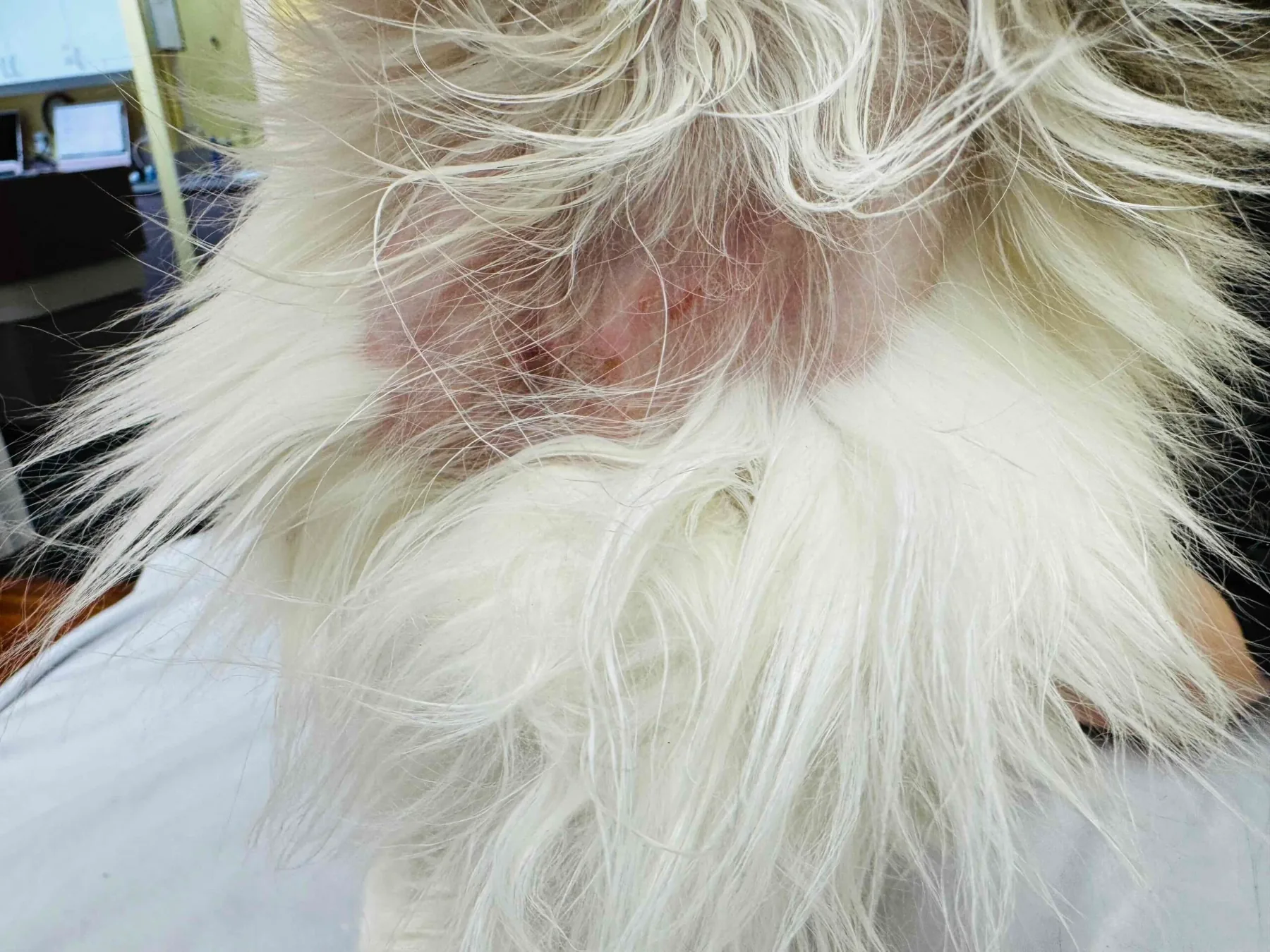
Matting exists on a spectrum. Small isolated mats, dense retained undercoat, webbed sections, and a single fused pelt require different tools and risk decisions.
Small localized mats
Limited tangles may still separate or be removed in a targeted way when the skin remains accessible.
Explore this guideDense retained coat
Undercoat can compact before obvious hard mats form, changing movement and making home brushing ineffective.
Explore this guideWebbing and fusion
Hair begins to connect across a larger area and can no longer move freely as separate coat.
Explore this guideFull-body pelting
A connected layer may extend across the torso and require controlled clipping close to the skin.
Explore this guideHidden skin changes
Moisture, debris, irritation, pressure, or wounds may only become visible during removal.
Explore this guideRecurring matting
Age, pain, obesity, coat type, illness, and maintenance intervals can all contribute.
Explore this guide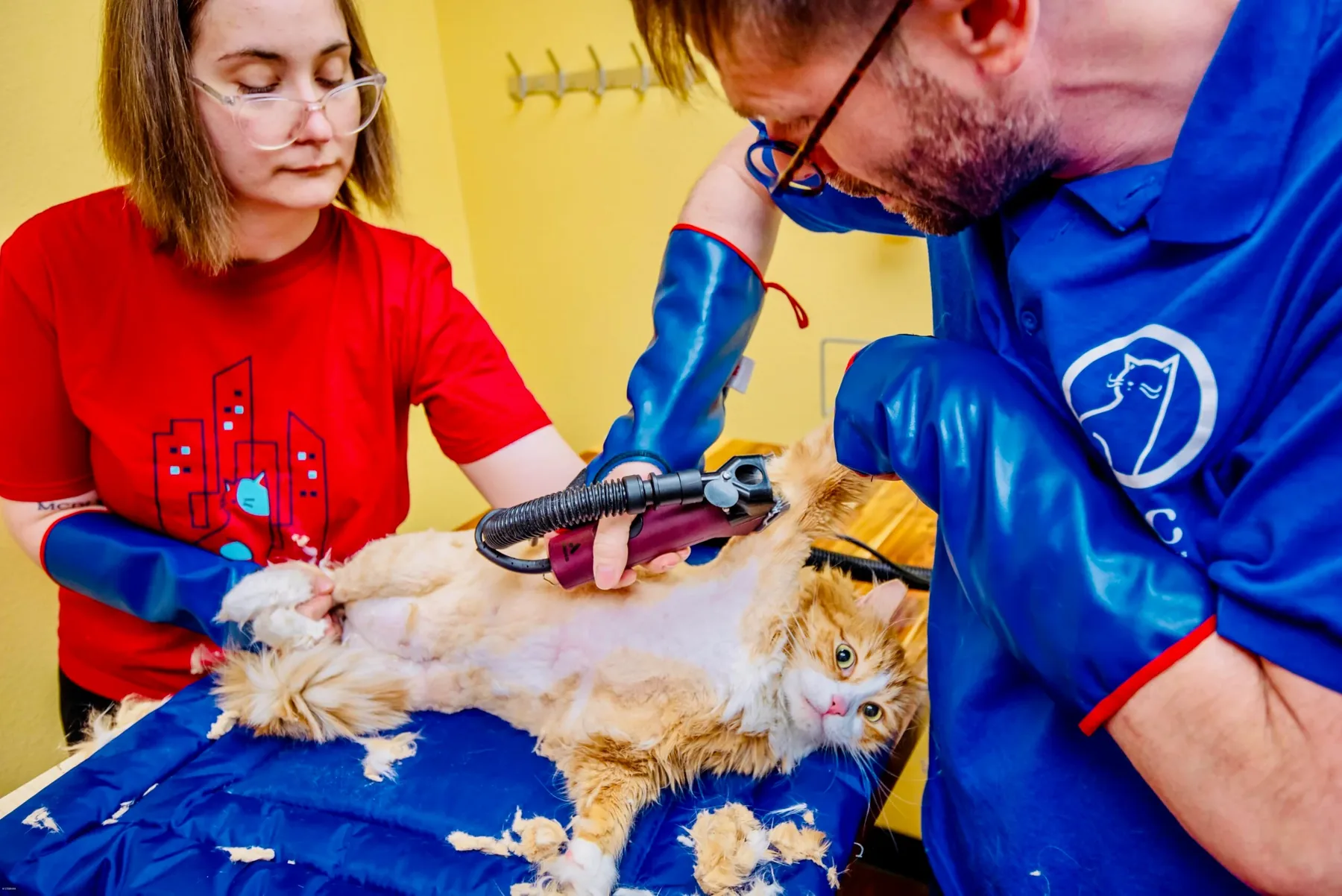
Why removal takes judgment
The team works between coat, skin, body position, and tolerance
Matted coat can hide the contour of the body and limit access to the skin. The team must determine where a safe plane exists, how much tension the coat is applying, and which areas should be approached first.
Clipping is not a cosmetic shortcut when coat has become structurally fused. It can be the least traumatic way to separate the cat from a restrictive layer.
The finish may be intentionally uneven or shorter than a conventional haircut because the priority is safe liberation, skin visibility, and a maintainable reset.
What happens next
A clear path from concern to care
The goal is not to force every cat through the same appointment. It is to understand the need, choose the least disruptive effective plan, and adjust from what the cat communicates.
- 1
Stop home pulling and scissor work
Avoid adding tension or cutting where skin position cannot be confirmed.
- 2
Send current photos and history
Include when the coat changed, whether the cat is grooming, and any mobility or medical concerns.
- 3
Plan for discovery
Skin findings, hidden debris, claw problems, or a larger connected pelt may change the appointment once removal begins.
Common questions
Questions guardians ask before booking
These answers are educational and cannot replace veterinary evaluation when a medical problem is suspected.
Can severe mats be brushed out?
Repeated brushing can add pain and skin tension. Once coat is fused or close to the skin, controlled clipping is often more appropriate.
Will the haircut look even?
Not always. Safe coat removal follows the location and depth of matting rather than a cosmetic pattern.
Should a veterinarian see the cat first?
Urgent pain, open wounds, bleeding, marked odor, illness, or sudden coat collapse should be discussed with a veterinarian. Grooming and veterinary care may both be needed.
Keep exploring
Related grooming routes
Move from the concern you can see to the service, handling approach, or local clinic most likely to help.
Why cats stop maintaining coat
Explore age, pain, body size, coat density, and other contributors.
Explore this guideCoat maintenance after reset
Build a deshedding and bathing interval that matches the cat.
Explore this guideFull clinical authority library
Read the deeper Cats in the City matting frameworks and case material.
Explore this guidePhase 2 deep routes
Explore 13 focused guides
These pages begin with a specific service, body area, coat change, handling barrier, or decision. Each route links back to Cats in the City for the deeper care system and booking.
Next step
Ready to choose a grooming starting point?
Appointments are provided by Cats in the City at its Powell and Beaverton feline-care locations.