
Claws and paw care
Thick Claws in Senior Cats
Senior claws may become thick, layered, and less able to shed outer sheaths. They can look blunt while still growing in a curve toward the pad, particularly when scratching and activity decline.
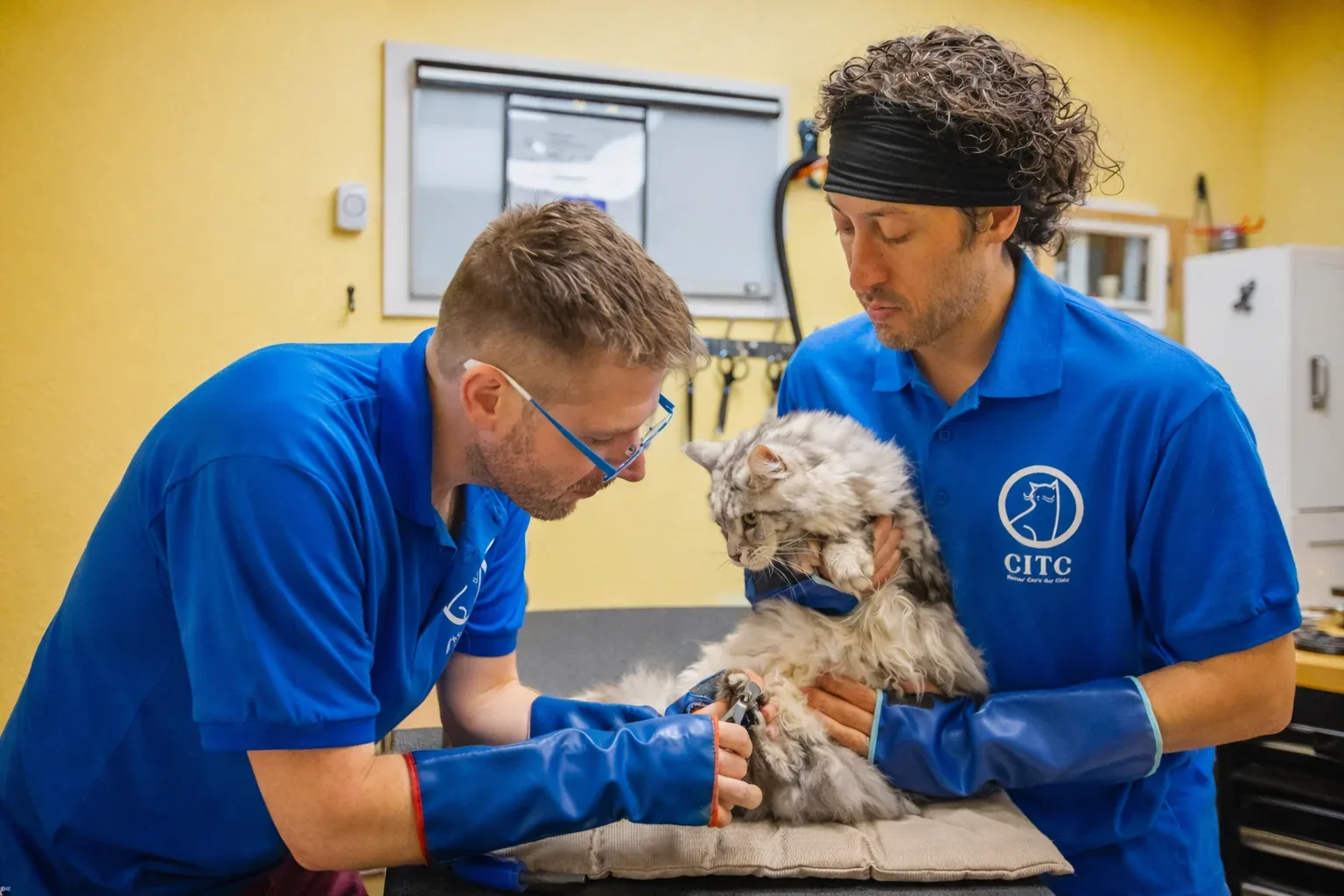
The practical answer
Start with function, not a preset service name.
Professional trimming removes length with clear visualization, evaluates every digit, and avoids twisting arthritic toes. Penetration or infection is referred for veterinary care.
Coat, skin, body position, health history, and handling response are assessed together. The final service may differ from the label used during booking.
What guardians may notice
Observable signs that help the team understand the problem
Describe what you can see, feel, smell, or observe during movement. You do not need to diagnose the cause before booking.
Wide layered claws
Debris around the claw bed
Dewclaws forming tight curves
Reluctance to scratch, jump, or allow paw handling
Why it may be happening
Several systems can converge in the same grooming problem.
- 01
Reduced activity and scratching
- 02
Altered sheath shedding
- 03
Arthritis and paw position
- 04
Long intervals between complete claw checks
Professional scope
What a structured grooming visit can do
- Inspect every claw, including dewclaws, for length, thickness, shedding, curvature, pad contact, and tenderness.
- Trim in a supported position that protects the cat’s joints and allows clear visualization of the quick.
- Separate routine maintenance from penetrations, infections, wounds, or other problems needing veterinary care.
- Recommend a repeat interval based on growth rate, age, mobility, scratching behavior, and previous overgrowth.
Professional trimming removes length with clear visualization, evaluates every digit, and avoids twisting arthritic toes. Penetration or infection is referred for veterinary care.
Avoid preventable injury
What not to force at home
- Do not pull a claw out of a pad or probe a wound at home.
- Do not twist a stiff senior toe or force full limb extension to reach a claw.
- Do not apply adhesives, covers, or topical products to an inflamed paw without veterinary direction.
Lead with veterinary care
Findings that should not wait on a grooming solution
- A claw penetrating the pad, active bleeding, pus, swelling, heat, foul odor, or significant lameness.
- A torn claw, suspected fracture, deep wound, or a cat who will not bear weight.
- Persistent pain or recurrent claw-bed debris that needs diagnosis and treatment.
Cats in the City authority source
Continue into the deeper care library
This Cat Grooming Portland page is the consumer route. Cats in the City holds the service, clinical handling, case, and care-system material behind it.
Common questions
Thick Claws in Senior Cats FAQ
Are thick claws dead tissue?
The outer horn is nonliving, but the quick and claw bed are sensitive and must be protected.
Can sheaths be peeled off?
Loose sheaths may release, but forced peeling can injure living tissue.
How often should they be checked?
Often every few weeks, adjusted to the cat’s growth pattern.
Related routes
Continue by service, condition, or next decision
Book the cat, not a fixed script
Tell the team what you are noticing.
The Cats in the City team assesses the coat, body, health history, and handling needs at check-in and confirms the appropriate care path.