
Handling-sensitive and awake grooming
Cat Grooming Without Sedation in Portland
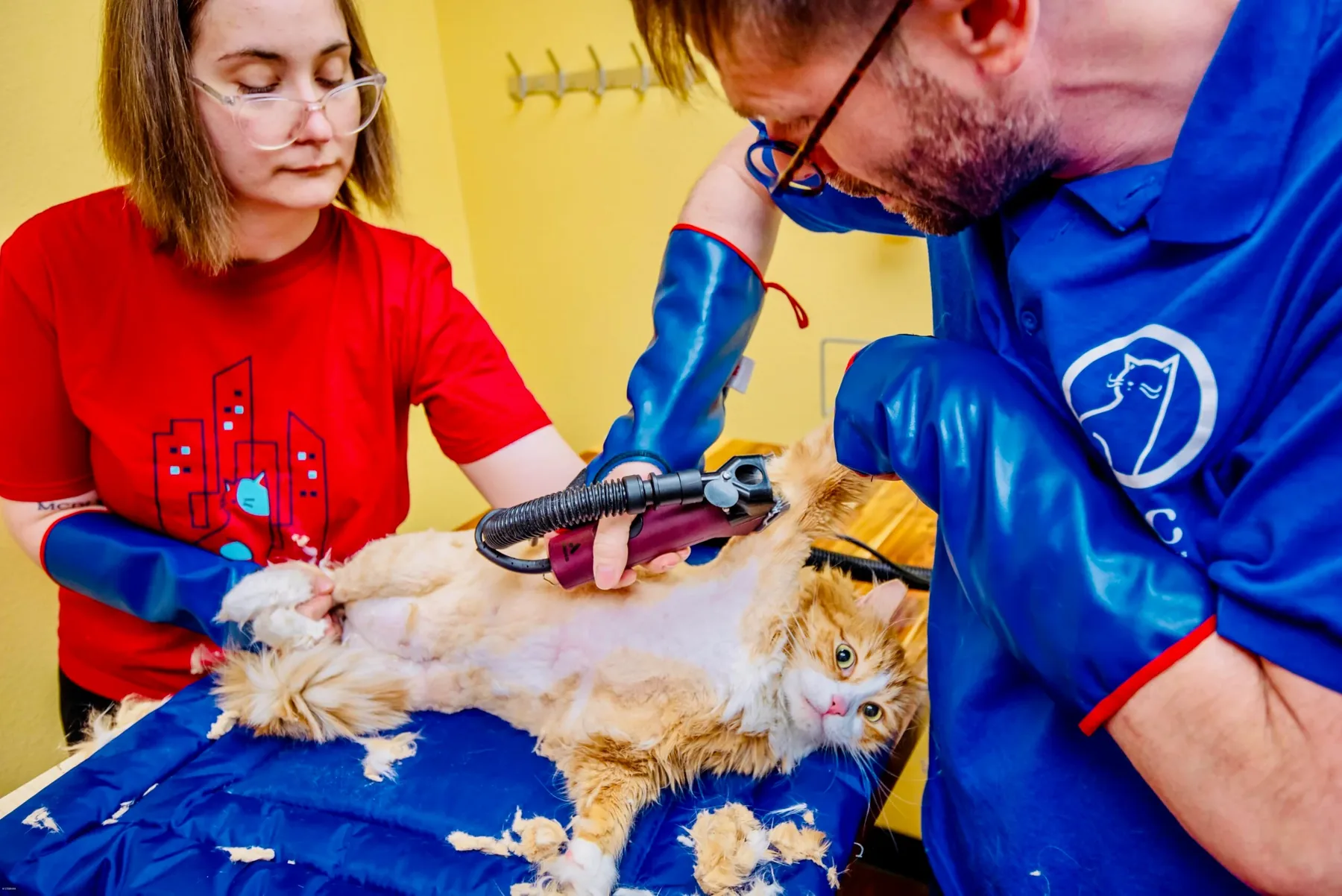
Awake grooming can be appropriate when the team can maintain physical safety, physiological stability, and enough cooperation to complete necessary care without disproportionate force. It is a clinical judgment, not a promise that medication or sedation will never be used.
The practical answer
Start with function, not a preset service name.
The team continually chooses among awake care, veterinary-prescribed pre-visit medication, staged completion, deferral, or veterinary sedation. The least invasive route must still be effective and safe.
Coat, skin, body position, health history, and handling response are assessed together. The final service may differ from the label used during booking.
What guardians may notice
Observable signs that help the team understand the problem
Describe what you can see, feel, smell, or observe during movement. You do not need to diagnose the cause before booking.
A cat who communicates but can recover between steps
Care that can be prioritized or staged
A cat whose medical history makes anesthesia undesirable but not automatically unsafe
A team and environment designed for feline-only handling
Why it may be happening
Several systems can converge in the same grooming problem.
- 01
Handler skill and staffing
- 02
Procedure intensity and duration
- 03
The cat’s health, pain, behavior, and history
- 04
Availability of medication, stopping points, and referral
Professional scope
What a structured grooming visit can do
- Begin with the cat’s history, present behavior, body position, sound response, and the minimum care that must be accomplished.
- Use team-based support, natural positions, environmental modification, pacing, and stopping points rather than escalating force.
- Adjust the sequence so the most necessary care is completed while the cat has the most usable capacity.
- Document what helped, what increased stress, and what should change at the next visit.
The team continually chooses among awake care, veterinary-prescribed pre-visit medication, staged completion, deferral, or veterinary sedation. The least invasive route must still be effective and safe.
Avoid preventable injury
What not to force at home
- Do not punish, pin, scruff, chase, or continue simply because the appointment was scheduled.
- Do not test repeated home restraint when the cat is escalating or when bites and scratches are becoming more likely.
- Do not give prescription medication unless it was prescribed for that cat and the timing and dose are clear.
Lead with veterinary care
Findings that should not wait on a grooming solution
- Open-mouth breathing, collapse, blue or pale gums, seizure activity, or prolonged inability to recover after stress.
- A sudden behavior change that may reflect pain, neurological change, urinary obstruction, injury, or acute illness.
- A prescribing question, adverse medication response, or need for sedation/anesthesia planning.
Cats in the City authority source
Continue into the deeper care library
This Cat Grooming Portland page is the consumer route. Cats in the City holds the service, clinical handling, case, and care-system material behind it.
Common questions
Cat Grooming Without Sedation in Portland FAQ
Does awake grooming mean no medication?
No. Some cats are awake with prescribed pre-visit medication.
Can every cat be groomed awake?
No. Some require sedation or anesthesia because of medical, behavioral, or procedural risk.
Why use two people?
A trained handler can support balance, body position, observation, and communication while the groomer performs the procedure.
Related routes
Continue by service, condition, or next decision
Book the cat, not a fixed script
Tell the team what you are noticing.
The Cats in the City team assesses the coat, body, health history, and handling needs at check-in and confirms the appropriate care path.